
#103 – A Different Take on Gratitude | 52 Life Lessons – Lesson 21
For driven people, gratitude can feel like a threat to ambition: if I’m content with what I have, will I stop pushing forward? In episode 21 of the 52 Life Lessons series, host Tim Borys shares why that belief kept him from gratitude for years, and how the birth of his daughter changed his view in an instant.
Drawing on research into gratitude as a social emotion, workplace studies on how colleagues respond to it, and a 2023 meta-analysis that keeps expectations honest, Tim offers a grounded alternative to the all-or-nothing journaling ritual. Gratitude, he argues, is a relationship practice: specific, spoken aloud, and strongest when the person it’s about can hear it. His challenge for the week is simple, and it takes about two minutes.
Drawing on his own experience as an athlete, coach, parent, and business owner, along with research on feedback, gratitude, and the positive deviance approach used in rural Vietnam, Tim lays out a practical framework: See it, Say it, Scale it. His closing challenge is simple and immediate. Within the next twenty-four hours, catch one person doing excellent work, and tell them specifically what you noticed. Done consistently, that is how standards rise without anyone feeling lowered.
#102 – Why Wellbeing Drives Team Performance (with Eric Paul & Shawn Maurice)
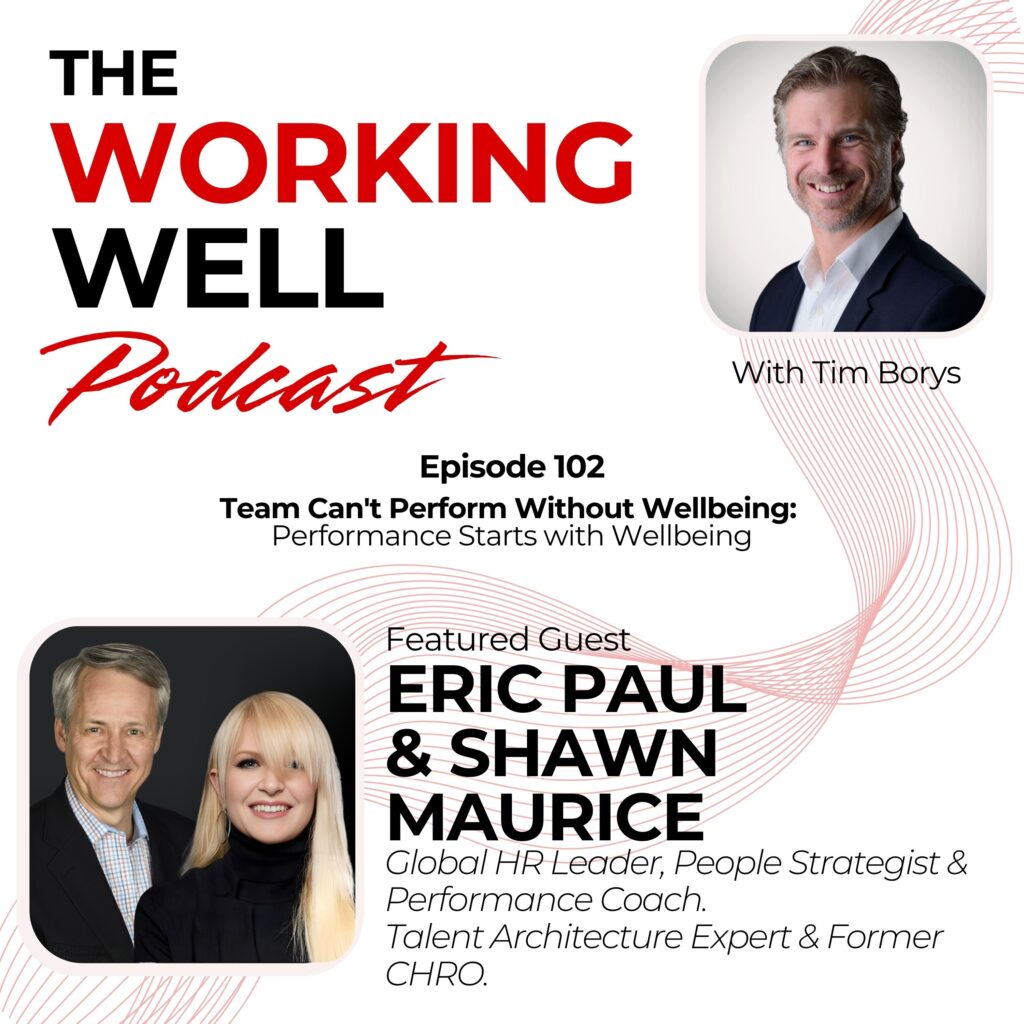
Most organizations treat employee wellness and business performance as two separate conversations: one for HR, one for the boardroom. Eric and Sean, two veteran talent leaders with decades of combined experience inside Fortune 100 and global technology companies, argue that’s exactly backwards. In this episode of the Working Well Podcast, they make the case that performance is simply the outcome of wellness and well-being working in harmony — and that leaders, whether they intend to or not, are the primary role models shaping whether their teams thrive or burn out.
From a story about a senior executive who didn’t realize his own working hours were keeping his entire floor at their desks, to a candid breakdown of why AI transformation should be a people strategy first and a technology strategy second, this conversation offers leaders a practical, dollars-and-cents case for why well-being belongs at the center of business strategy, not on its edges.