
Disclaimer: The views, thoughts, and opinions expressed in this post belong solely to Alex Gris. They do not represent, reflect, or relate to the official policy, position, or opinions of Google or any of its affiliates.
Podcast Summary
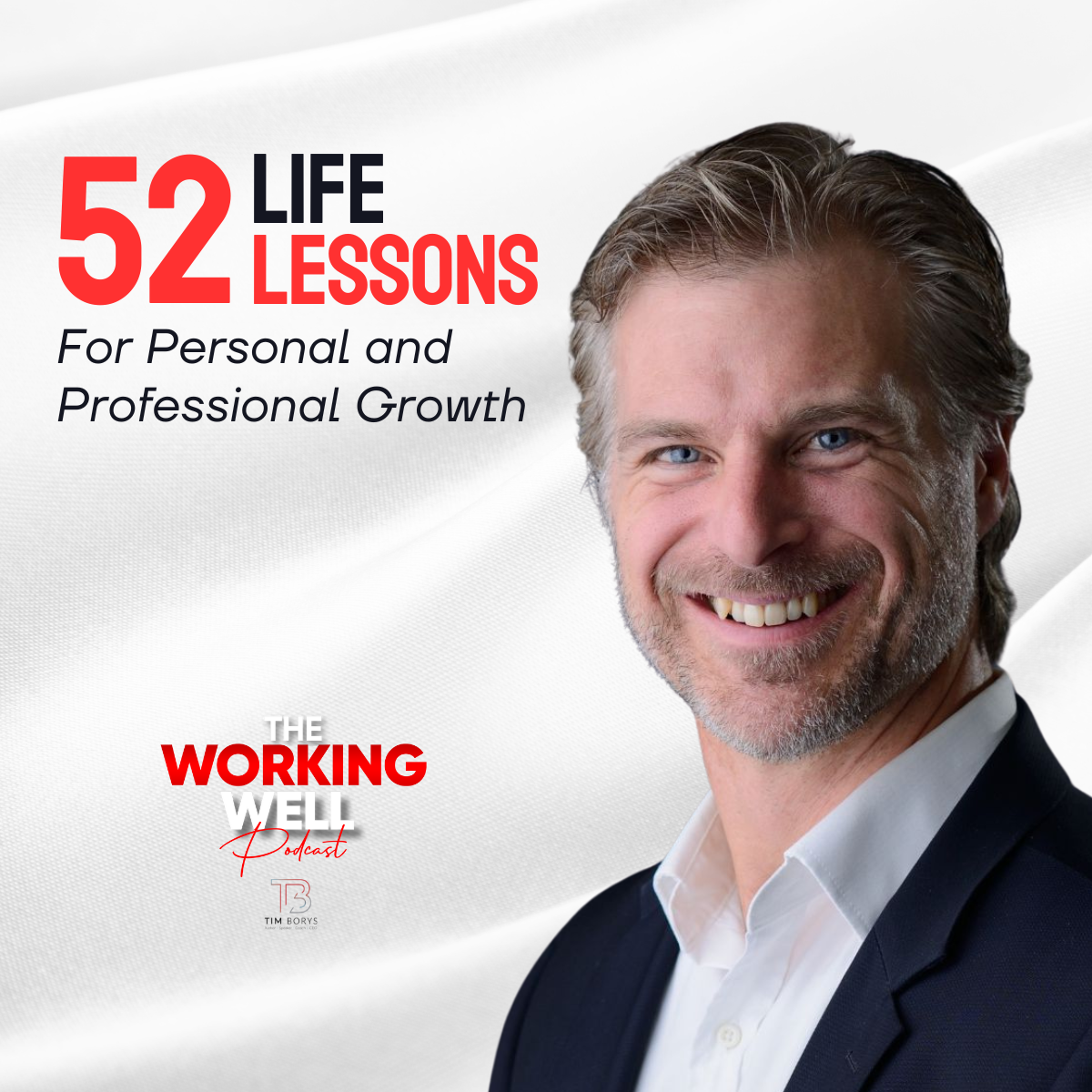
In episode 19 of the 52 Life Lesson series on the Working Well Podcast, host Tim delivers a solo reflection on one of the most important distinctions in leadership: the difference between leadership that builds capacity and leadership that quietly consumes it. Tracing his own leadership instincts back to teaching baseball to nervous kids at a summer camp, Tim walks through his evolution strength coach, personal trainer, business owner, executive coach and the consistent thread underneath all of it: helping another human see more possibility in themselves.
The episode’s central story is a candid admission of failure. Early in his business, frustrated by inconsistent service delivery, Tim responded the way many well-intentioned owners do by issuing policies and executive decrees. It backfired, cost him good people, and forced a harder realization: he’d been treating symptoms while ignoring root causes, and had unintentionally started viewing his team as the problem rather than partners in solving one.
That failure became the foundation for a framework Tim uses throughout the episode: additive leadership increases clarity, trust, and capacity in the people and systems around a leader, while reductive leadership even when it produces short-term results through authority, pressure, or fear slowly grinds down the people responsible for delivering them. Using Paul O’Neill’s safety-first transformation of Alcoa and Amy Edmondson’s psychological safety research as anchoring examples, Tim makes the case that additive leadership isn’t about lowering standards or avoiding hard conversations it’s about holding high standards while treating people with dignity. The episode closes with a challenge: the real measure of leadership isn’t how many people follow you in the room, but how well they lead when you’re not there.
✅ Key Takeaways
- Leadership is either additive or reductive rarely neutral. Additive leadership builds clarity, confidence, trust, and ownership. Reductive leadership creates confusion, fear, dependence, and friction even when it still produces short-term results.
- Reductive leadership is often mistaken for strength. A decisive, always-available, constantly-involved leader can look impressive from the outside while quietly breeding organizational anxiety, withheld bad news, and teams waiting for approval on the inside.
- Policies don’t fix root causes conversations do. Tim’s own early leadership failure came from addressing visible symptoms (inconsistent service) with executive decrees instead of understanding the operational and behavioral barriers his team was actually facing.
- Additive leadership still holds high standards. It is not the same as avoiding conflict or trying to keep everyone happy “kindness without standards becomes avoidance; standards without humanity can become abuse.”
- Safety and performance aren’t competing priorities. Paul O’Neill’s tenure at Alcoa where a zero-injury aspiration became a catalyst for improving communication, consistency, and business performance shows that human-centered goals can strengthen, not distract from, results.
- The real test of leadership is what happens in your absence. Leaders who ask “What do you think?” instead of always providing answers create other leaders. The mark of leadership isn’t how many people follow you in the room it’s how well they lead when you’re not there.
Episode Links & Resources
Connect with Tim: https://timborys.com/book-tim/
Buy Tim’s Book: The Fitness Curveball (Amazon Link)
Podcast Highlights
Please note: This highlight is generated by a computer and may contain errors.
Leadership Doesn’t Start With a Title
Tim opens by dismantling a common myth: that leadership begins the moment someone hands you a title. His own first experience of leadership, he says, came as a teenager teaching baseball to young kids at summer camp.
“The real work was bigger than baseball. It was helping a nervous child step up to the plate… creating an environment where kids felt safe enough to look awkward, to make mistakes, to learn, laugh, and keep going.”
He traces the same thread through decades of different roles strength coach, personal trainer, business owner, executive coach noting that the core work never changed: helping another person see more possibility in themselves.
The Policy Failure That Changed Everything
Early in his own business, Tim describes becoming frustrated by inconsistent service delivery different outcomes depending on who was working that day. His instinct, like many business owners, was to respond with authority:
“I created policies, lots of policies… here’s the new system. Follow it. Problem solved.”
It wasn’t solved. The policies made things worse, increased frustration, and cost him a couple of great people. Looking back, Tim admits he’d started unconsciously treating his team as though they were deliberately sabotaging the business — when in reality, they were navigating challenges he hadn’t taken the time to understand.
“I’d addressed the visible symptoms while ignoring the root causes.”
The shift came when he retired the executive decree and had genuine conversations with his team asking what was actually breaking down, what barriers people faced, and what they could see that he couldn’t from his position.
“I stopped trying to force people to comply with my solution and invited them to help solve our shared problem.”
The results came quickly: higher engagement, more consistent service, better client experience, and stronger business performance.
Defining Additive vs. Reductive Leadership
That experience led Tim to the framework at the heart of this episode:
“Additive leadership increases the capacity of the people and the systems around you. It adds clarity. It builds confidence. It develops trust, knowledge, energy, ownership, and meaning.”
Reductive leadership does the opposite creating confusion, fear, dependence, exhaustion, and mistrust. Critically, Tim notes that reductive leadership can still produce results for a while, powered by authority, pressure, fear, and financial incentive:
“One approach strengthens the system, the other consumes it.”
Why Reductive Leadership Gets Mistaken for Strength
Tim warns that a decisive, demanding, always-available leader can look impressive from a distance — but the internal experience is often very different:
“Inside the team, everyone’s waiting for approval. They’re protecting themselves from blame, withholding bad news, or trying to guess which version of the boss is going to show up this day.”
He’s careful to clarify that additive leadership isn’t about lowering standards, avoiding conflict, or keeping everyone happy — some decisions will disappoint people, and some conversations will be uncomfortable.
“Kindness without standards, well, that becomes avoidance. Standards without humanity can become abuse. Leadership lives in the tension between those two.”
People and Profitability Aren’t Competing Priorities
Tim challenges a belief he calls remarkably persistent despite making little sense — that leaders must choose between caring for employees and delivering results.
“Organizations don’t produce results. People using organizational systems produce results.”
He cites research showing empowering leadership giving people clear context, meaningful responsibility, autonomy, support, and trust is positively associated with performance, creativity, trust, and helpful workplace behavior.
The Alcoa Story: Safety as a Catalyst for Performance
Tim points to Paul O’Neill’s tenure as CEO of Alcoa beginning in 1987, when O’Neill set an aspiration of zero workplace injuries not “fewer” injuries, not an industry-average rate, zero. Investors initially expected talk of margins and market share instead.
“Improving safety required the company to improve everything surrounding the work… safety was not separate from performance. It became a catalyst for performance.”
Alcoa dramatically reduced lost workdays from injury during O’Neill’s tenure while strengthening business performance proof, in Tim’s framing, that a human-centered goal can require (and produce) improvement across an entire operating system.
The Real Job of a Leader: Creating More Leaders
Tim revisits a familiar leadership saying that a leader’s job is to create more leaders, not more followers and makes it uncomfortably concrete with a set of direct questions:
“Do your people become more capable around you or more dependent? Can they challenge your thinking without being punished — or even worse, do you say they can, but subconsciously punish them anyway?”
He argues this requires a shift from always providing answers to asking better questions “What do you think? What are we missing? What decision would you make if I weren’t here?” and tolerating productive struggle instead of grabbing work back the moment it gets uncomfortable.
Psychological Safety Isn’t the Absence of Accountability
Tim brings in Amy Edmondson’s research on psychological safety, which shows teams learn more effectively when people can raise concerns, admit mistakes, and challenge assumptions without fear of humiliation.
“Psychological safety doesn’t mean freedom from accountability. It means people do not have to spend most of their mental bandwidth trying not to look foolish.”
He notes hearing this constantly from his own coaching clients workplaces where people stay quiet because speaking up, or making a mistake, carries real personal risk.
You Can’t Lead Others Without Leading Yourself
Tim pushes back gently on the popular saying “you can’t pour from an empty cup”:
“You can pour from an empty cup. I did it for years. But what comes out is usually a mixture of caffeine, cortisol, impatience, and fumes.”
Exhaustion, he argues, changes the quality of leadership itself leaders become less patient, less curious, less generous in how they interpret others, reacting faster and reflecting less.
“Leading yourself is not selfish. It protects the quality of your influence.”
The Ripple Effect of Every Interaction
Tim closes with the idea that every interaction at home, at work, even with a stranger leaves people with something: more energy or less, clarity or confusion, confidence or doubt. For leaders, that ripple is amplified.
“One impatient comment can silence a team. One thoughtful question can unlock an idea.”
He acknowledges that words like “love” may feel uncomfortable in a corporate context, but reframes care, courage, dignity, respect, and fairness as both forms of love in action and serious business tools.
Three Questions and One Action
Tim leaves listeners with three reflective questions: How am I leading myself? Are my actions adding to the capacity of the people around me, or reducing it? Who’s becoming a stronger leader because of how I showed up?
He follows with a concrete challenge: pick one person this week, give them more context, ask for their recommendation, let them make a meaningful decision, support them without taking over then step back and let them lead.
“The true mark of your leadership is not how many people follow you while you’re in the room. It’s how well they lead when you’re not.”