Podcast Summary
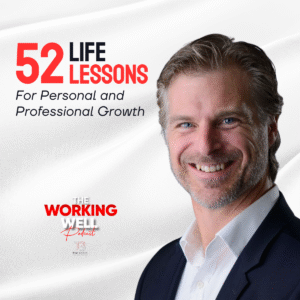
In Episode 17 of the 52 Life Lessons series, Tim Borys explores one of the most powerful influences on performance, relationships, and leadership: the conversation happening inside your own head.
Tim challenges the common idea that self-criticism is simply a sign of high standards, discipline, or ambition. Drawing from his own experience as an athlete, entrepreneur, coach, and lifelong learner, he reveals how a harsh internal voice can quietly limit growth — even in highly successful people.
Through personal reflection and insights from Shirzad Chamine’s Positive Intelligence framework, Tim explains the difference between operating from saboteur patterns versus a sage perspective. He explores how old mental scripts, formed as coping mechanisms, can continue running long after they stop serving us.
This episode examines how upgrading self-talk improves emotional regulation, decision-making, leadership presence, and the ability to create healthier relationships with ourselves and others.
✅ Key Takeaways
- Your inner dialogue shapes your external leadership. The way you speak to yourself affects how you communicate, decide, and lead.
- Familiar thoughts are not always true thoughts. Old patterns can feel like identity even when they are outdated.
- High achievement can hide unhealthy self-talk. Discipline and accountability become harmful when powered by shame and fear.
- Awareness creates choice. Naming mental patterns creates distance and reduces their control.
- Confidence comes from evidence. It is built through repeated actions that prove you can handle challenges.
- Not every thought deserves a seat at the executive table. Choose which thoughts receive authority.
Episode Links & Resources Mentioned:
Connect with Tim: https://timborys.com/book-tim/
Buy Tim’s Book: The Fitness Curveball (Amazon Link)
Podcast Highlights
Please Note: This highlight is generated by a computer and may contain errors.
Introduction: The Most Important Conversation
The most important conversation you have every day is the one happening inside your own mind.
But many people never stop to examine it.
Tim opens this lesson by explaining that upgrading self-talk is not about fake positivity or empty affirmations. It is about understanding the internal dialogue that influences:
- Performance
- Leadership
- Relationships
- Personal growth
For years, Tim believed his inner critic was simply “who he was.” He later discovered something transformative:
A familiar thought pattern is not automatically the truth.
The Hidden Cost of the Inner Critic
Many high performers believe their harsh inner voice is what drives success.
They call it:
- High standards
- Discipline
- Accountability
But Tim explains that when these qualities are fuelled by fear, shame, and relentless judgment, they come with a cost.
You may still achieve goals:
- Build the business
- Earn recognition
- Reach milestones
But if your inner voice never allows you to celebrate or feel enough, success becomes empty.
Success in One Area Does Not Mean Growth Everywhere
Tim shares a powerful realization from his own life.
He had developed strong mental skills through:
- Sports
- Fitness
- Coaching others
- Performance psychology
Yet in areas like business, money, and self-worth, his inner critic operated very differently.
This highlights a common experience among high performers:
You can be highly developed in one area of life while struggling internally in another.
Understanding Saboteurs and the Sage
Tim introduces the Positive Intelligence framework by Shirzad Chamine.
The framework describes two competing perspectives:
Saboteur Mode
Driven by:
- Fear
- Judgment
- Control
- Avoidance
- People pleasing
These patterns often developed as protective strategies earlier in life.
The problem?
They may continue running even when they are no longer useful.
Sage Perspective
Driven by:
- Curiosity
- Empathy
- Exploration
- Innovation
- Clear action
The sage does not ignore reality.
It simply responds without unnecessary negativity.
The Hyper Achiever Trap
One saboteur pattern Tim highlights is the hyper achiever.
Hyper achievers often appear successful:
- They hit goals
- They win awards
- They build teams
- They advance quickly
But internally, their worth becomes tied to the next achievement.
The voice says:
“You are only as valuable as your next result.”
This creates a cycle where success never feels complete.
Self-Talk Is a Leadership Skill
Tim explains that leaders do not leave their inner dialogue behind.
They bring it into:
- Meetings
- Decisions
- Conflict
- Coaching conversations
A leader dominated by judgment may struggle to create psychological safety.
A leader dominated by fear may avoid bold decisions.
A leader trained in healthier self-talk can:
- Pause instead of react
- Ask instead of assume
- Repair instead of defend
- Challenge without shaming
Your internal state becomes the environment others experience.
The Four Ns Practice
Tim shares a practical framework for upgrading self-talk:
1. Notice
Recognize the repeated phrases:
“I should be further ahead.”
“I always mess this up.”
“They’ll think I’m incompetent.”
2. Name
Identify the pattern.
“This is my judge speaking.”
Not:
“I am failing.”
But:
“My mind is creating a failure story.”
3. Neutralize
Create space through:
- Breathing
- Physical awareness
- Grounding
- Present-moment attention
4. Navigate
Ask better questions:
- What is actually true?
- What matters most right now?
- What is within my control?
- What is the next useful action?
Closing Reflection
Tim explains that the goal is not to eliminate negative thoughts.
That is impossible.
The brain is designed to create thoughts including dramatic and unhelpful ones.
The goal is awareness.
Not every thought deserves authority.
Some thoughts belong in the lobby, not the boardroom.
The question is:
Is your inner voice helping you become the person, leader, and human you want to be?
If not, it may be time for an upgrade.