
Podcast Summary
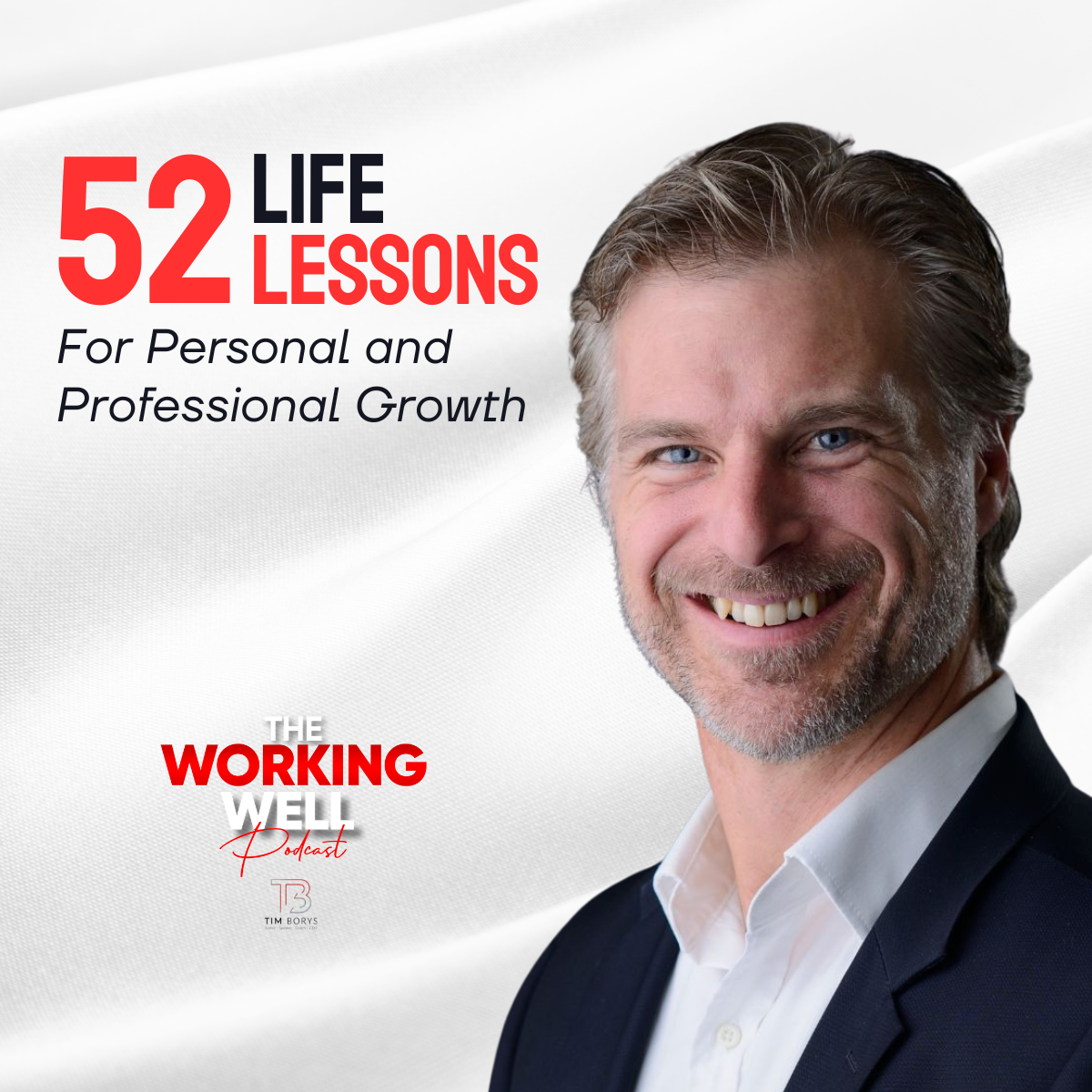
In episode 18 of the 52 Life Lesson series on the Working Well Podcast, host Tim delivers a deeply personal solo reflection on one of the most overlooked forms of leadership discipline: attention. Opening with a deceptively simple question “Where is your mind right now?” Tim walks through his own history of being physically present but mentally absent with his family, and the quiet cost that divided attention exacted over years of building his business.
Drawing on research from psychologists Matthew Killingworth and Daniel Gilbert on mind-wandering, as well as studies on phone visibility and psychological detachment, Tim reframes “time management” as an attention problem rather than a scheduling problem. He extends this into leadership, arguing that leaders don’t just manage workloads they model relationships with work, and their visible habits (late-night emails, always-on availability) set the cultural standard for their teams whether they intend to or not.
The episode also tackles the counterintuitive value of unstructured time using Bill Gates’s famous “think weeks” and workplace micro-break research to argue that rest and reflection aren’t separate from performance; they are part of performance. Tim closes with a practical three-part framework invest in presence, invest in recovery, invest in experiences tying it back to the “four pillars of performance” (mindset, habits, movement, fuel) referenced throughout the series.
This is a candid, quotable episode for leaders, executives, and anyone who has confused being busy with being effective and a strong reminder that time, unlike money, offers no do-overs.
✅ Key Takeaways
- Presence is the real currency of time not hours. Research shows people’s minds wander during nearly half of waking activities, and happiness drops when attention is elsewhere. Giving someone your time without your attention is, in Tim’s words, “a pretty hollow gift.”
- A visible phone changes the interaction even if it never rings. Studies show merely having a phone visible during a meaningful conversation reduces trust, closeness, and empathy “face down is not the same as gone.”
- Leaders model relationships with work, not just workloads. A late-night email isn’t just an email it’s a cultural signal about what commitment looks like, regardless of any “no need to respond” disclaimer attached to it.
- Rest is not separate from performance it is part of performance. Just as elite sprinters can’t sustain full speed without recovery, research on workplace micro-breaks links short pauses to lower fatigue and greater vigor, while longer working hours show diminishing (and eventually negative) returns.
- Novelty makes time feel fuller in memory. Routine-heavy periods are remembered as shorter, while variety and new experiences create more “memory markers” a likely explanation for why childhood summers felt endless.
- Three investments for using time wisely: invest in presence (undistracted attention daily), invest in recovery (protected pauses and a real end-of-workday transition), and invest in experiences (one new or memorable thing each week).
Episode Links & Resources Mentioned:
Connect with Tim: https://timborys.com/book-tim/
Buy Tim’s Book: The Fitness Curveball (Amazon Link)
Podcast Highlights
Please note: This highlight is generated by a computer and may contain errors.
Where Is Your Mind Right Now?
Tim opens with a question designed to catch listeners off guard: not where are you physically, but where is your mind right now. For much of his own life, he admits, the honest answer would have been “not here.”
While building his business and raising young children, he told himself a convenient story — that long hours and divided attention were simply the price of providing for his family. It was true. It was also, he says, incomplete.
“I was technically present, but I wasn’t really there.”
He describes a self-created loop: at home, thinking about work; at work, thinking about home “a system where I could feel guilty in two locations at once.”
Regret Turned Into Tuition
Looking back, Tim’s hardest realization wasn’t that ambition was wrong it was that thoughts about tomorrow and yesterday repeatedly stole the experience of today. And unlike financial mistakes, there’s no reclaiming lost time.
“My children will never be that age again… all of those existed only once, and then they were gone.”
His reframe: regret only becomes useful when it’s converted into tuition a cost paid that changes future behavior, even if it can’t undo the past.
The Research Behind Divided Attention
Tim grounds this personal experience in research from psychologists Matthew Killingworth and Daniel Gilbert, whose work found that people’s minds wander during nearly half of their waking activities — and that people are measurably less happy when their attention is elsewhere.
“The issue wasn’t simply that I lacked time. It was that the time I had was being diluted by divided attention.”
He extends this to a well-known finding: merely having a phone visible during a meaningful conversation even if it never rings reduces feelings of trust, closeness, and empathy.
“Face down is not the same as gone.”
Attention as a Leadership Signal
This isn’t just a family dynamic, Tim argues it shows up powerfully in leadership. When a leader puts the phone away, makes eye contact, and genuinely listens, that attention becomes a signal of respect that goes far beyond the conversation itself.
“Leaders don’t simply manage workloads, they model relationships with work.”
He shares his own experience learning this the hard way: to change how his team related to work, he first had to change how he modeled it himself a process he describes candidly as “not pretty,” but ultimately effective once his team saw consistency between what he said and what he did.
Doing Nothing Is Sometimes the Wisest Investment
Tim describes years of compulsively filling every open gap — two minutes between meetings meant firing off an email; a moment in line meant a phone call. It felt efficient. It was, he says, “terrible for my focus, my creativity, and my ability to regulate stress.”
Drawing on his athletic background, he compares this to expecting a 100-meter sprint pace to hold for a marathon:
“The rest between sprints — it’s not separate from performance. It is the performance.”
Research on workplace micro-breaks supports this: short breaks during demanding tasks are associated with lower fatigue and greater vigor, even if the evidence for immediate performance gains is more mixed. Similarly, research on working hours challenges the assumption that more hours produce proportionally more output beyond a certain threshold, output rises more slowly while fatigue compounds.
Ending the Workday on Purpose
One of the harder shifts for Tim was learning to deliberately end the workday — not because the work was complete (it never fully is), but because continuing past a point causes more cost than benefit. He cites research on psychological detachment showing that mentally disengaging from work during non-work time is linked to better well-being and less strain.
Critically, he notes that leaders influence whether their teams feel permitted to do the same:
“The late-night email is not only an email, it’s a cultural communication.”
Bill Gates’s “Think Weeks” and the Value of Strategic Space
Tim points to Bill Gates’s well-known practice of taking isolated “think weeks” away from Microsoft’s daily operations — including the 1995 retreat that produced his internet-strategy memo, The Internet Tidal Wave.
The takeaway isn’t that every executive needs a cabin in the woods, Tim clarifies, but that some strategic thinking genuinely requires space that day-to-day operations don’t provide.
“If every minute is filled with meetings, messages, and decisions, leaders find it extremely difficult to be efficient at managing today, and they can completely miss tomorrow.”
Why Time Feels Faster as We Age — and What to Do About It
In the episode’s final section, Tim turns to why time seems to accelerate with age. Research comparing routine and non-routine experiences shows that repetitive periods are remembered as shorter, while novelty and variety create more distinct “memory markers” — likely why childhood summers felt endless.
The fix isn’t abandoning routine altogether, but intentionally inserting pattern interrupts — a new activity, a different route, an unfamiliar meal, a new conversation.
“While you can’t add more hours to a day, you can definitely add more life and variety and interest to those hours.”
Three Investments for Using Time Wisely
Tim closes with a practical framework:
- Invest in presence — choose at least one daily activity where the phone is fully away and attention belongs completely to the people or task in front of you.
- Invest in recovery — protect small pauses during the workday and create a deliberate end-of-day transition that signals to your brain the day is done.
- Invest in experiences — create one new or memorable experience each week to interrupt routine and support engagement.
He ties these back to the “four pillars of performance” referenced throughout the series — mindset, habits, movement, and fuel — before closing with a direct challenge to listeners:
“There are no refunds, there are no exchanges, and there aren’t any do-overs. Invest it wisely.”