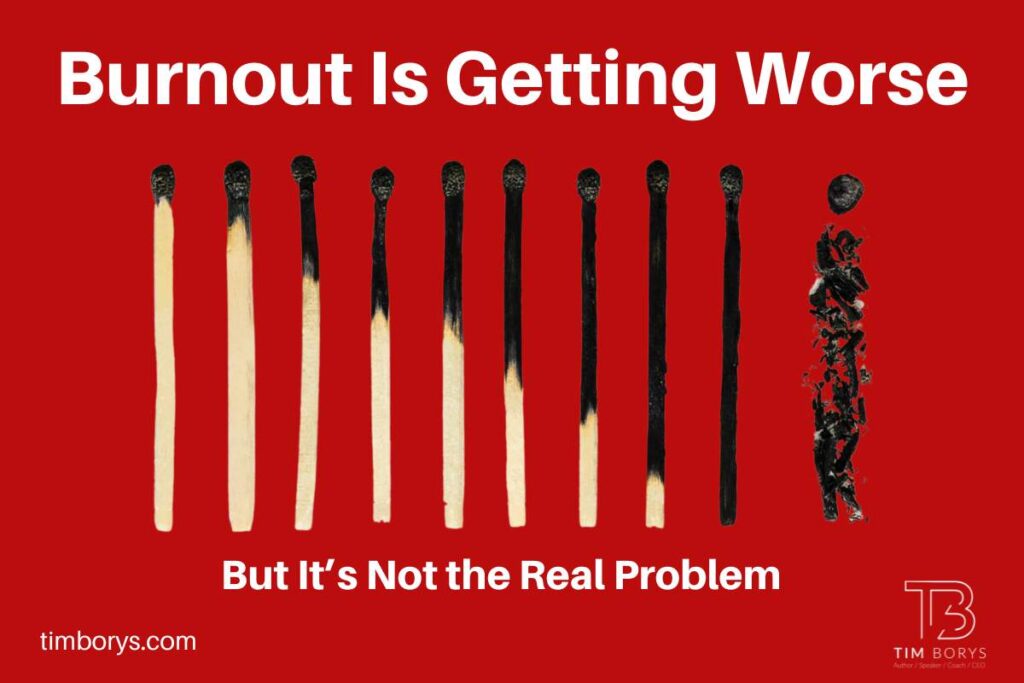
Burnout is not an individual resilience problem.
Burnout Is Getting Worse. But It’s Not the Real Problem.
I was recently interviewed by Joanne Richard for a Toronto Sun article on burnout, and the headline says what many leaders already know:
Burnout is getting worse.
But here’s the point I believe we need to talk about more honestly.
* Burnout is not simply an individual resilience problem.
* It’s not solved by wellness webinars, meditation apps, or telling people to “take better care of themselves” while the system around them keeps draining their energy and vitality.
Burnout is a signal.
A signal that an organization’s Human Operating System is breaking down.
When people are constantly overwhelmed, disengaged, exhausted, reactive, or cynical, the question leaders should be asking is not:
“What’s wrong with our people?”
The better question regarding burnout is:
“What have we designed, tolerated, rewarded, or ignored that is making sustained performance so difficult?”
Culture is not a slogan on a wall or website.
It’s what happens in the Monday morning meeting.
What gets rewarded under pressure.
How leaders respond when workloads are unrealistic.
Whether people have clarity, autonomy, recovery, trust, and a sense that their work actually matters.
Burnout is fuelled by outdated assumptions about human performance:
* More hours equals more output.
* Urgency equals importance.
* Busy equals valuable.
* Rest is weakness.
* Wellbeing is personal, but performance is organizational.
That last burnout myth is the trap.
You cannot separate human wellbeing from business performance. People bring their nervous systems to work. Their energy, focus, habits, emotions, relationships, and physical health all show up in meetings, decisions, customer interactions, leadership behaviour, and execution.
This is why I believe the future of high performance is not “rise and grind.”
It is designing organizations for how humans actually work.
That means leaders need to look at four levels:
1. Mindset: Are people operating from clarity, trust, and purpose, or fear and survival?
2. Habits: Do the daily rhythms of work support focus and execution, or constant fragmentation?
3. Movement: Are people building the physical and mental capacity to sustain performance, or sitting in stress all day?
4. Fuel: Are people recovering, recharging, and reconnecting, or running on fumes and caffeine-powered optimism?
Burnout is not a badge of honour.
It is not the price of ambition.
And it is definitely not just an HR issue.
It is a leadership issue.
A culture issue.
A systems issue.
A business performance issue.
The organizations that thrive in the future will not be the ones that squeeze more out of depleted people.
They will be the ones that build healthier Human Operating Systems, where people have the capacity to think clearly, lead well, collaborate effectively, adapt quickly, and perform sustainably.
Because the real goal is not just fewer burned-out employees. The real goal is building workplaces where humans and business can thrive together.